
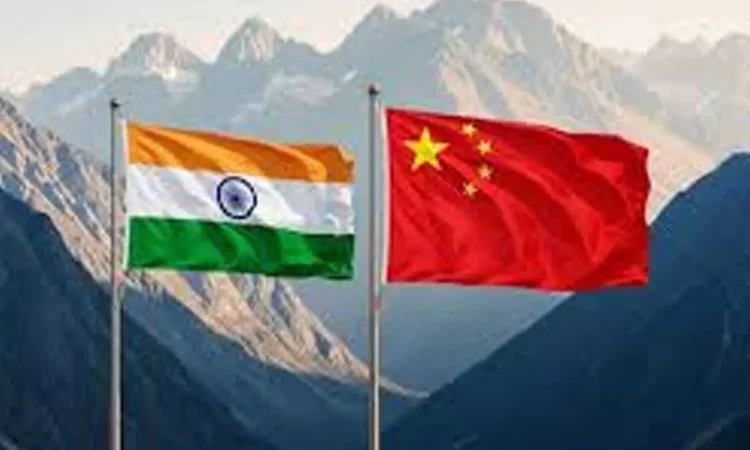
India has reinstated tourist visa services for Chinese citizens applying through its embassies and consulates worldwide, representing a significant step in mending relations following the extended military standoff along the Line of Actual Control (LAC). Sources indicate that the visa category was discreetly reopened earlier this week, despite the absence of a formal announcement. This action follows India’s earlier decision in July to recommence tourist visas for Chinese visitors via its missions in Beijing, Shanghai, Guangzhou, and Hong Kong.
The issuance of these visas had been suspended in 2020 after the onset of the border conflict that intensified with a violent encounter in the Galwan Valley, resulting in the deaths of 20 Indian soldiers and at least four Chinese troops, which brought bilateral relations to a historic low. Officials have noted that both nations have recently agreed on various measures aimed at restoring normalcy and fostering people-to-people interactions. Direct flights, which were halted since early 2020, resumed in October, and both parties have also consented to restart the Kailash Manasarovar Yatra next summer, simplify visa processes for various categories of travelers, and celebrate 75 years of diplomatic ties.
These initiatives reflect the leaders’ directives to revive suspended mechanisms and stabilize relations. Following the disengagement agreement for frontline troops in October 2024, Prime Minister Narendra Modi and President Xi Jinping met in Kazan, pledging to expedite efforts to resolve the border dispute and enhance cooperation. Since that time, the foreign and defense ministers of India and China, along with national security advisers and Special Representatives Ajit Doval and Wang Yi, have engaged in multiple rounds of discussions. These dialogues have facilitated renewed collaboration in areas such as border trade and economic coordination. Furthermore, China has taken steps to alleviate India’s trade concerns, including lifting export restrictions on rare earth minerals.


Collectively, these actions indicate a cautious yet significant shift toward rebuilding trust and enhancing bilateral relations after years of tension.