
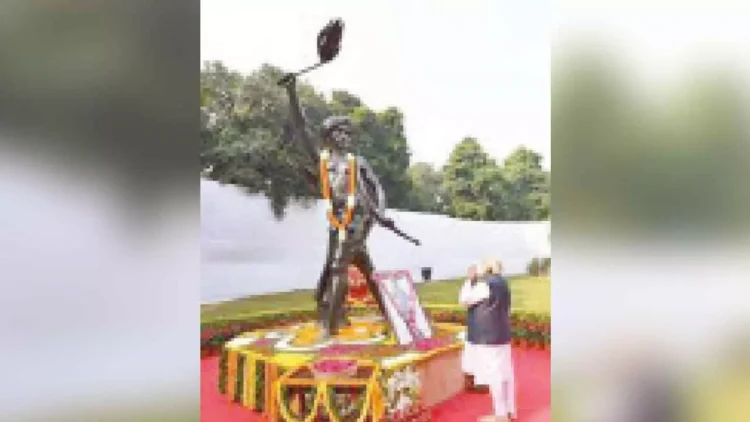
For centuries, India’s tribal freedom fighters were largely absent from national memory, their bravery overshadowed by dominant narratives of the independence movement. The central government, led by Prime Minister Narendra Modi, has sought to revise this narrative through various initiatives, including commemorations, memorials, family engagements, and development projects. As a result, tribal heroes are no longer mere footnotes in history but celebrated figures in India’s cultural landscape. One of the most significant actions taken was the establishment of November 15 as Janjatiya Gaurav Diwas, which commemorates the birth of Bhagwan Birsa Munda, a prominent leader of the Ulgulan movement.
This single day of observance has evolved into Janjatiya Gaurav Week, which features cultural events, exhibitions, and educational activities across the country. In 2023, the government also celebrated the 500th birth anniversary of Rani Durgavati, highlighting the contributions of tribal women to India’s freedom movement. Modi has consistently linked these celebrations to sites of resistance, honoring Santhal leaders on Hul Diwas and participating in the Mangarh Dhamki Gaurav Gatha in Rajasthan, which pays tribute to Govind Guru and other tribal martyrs. He made history as the first Prime Minister to visit Birsa Munda’s birthplace in Ulihatu, Jharkhand, where he offered floral tributes, further weaving tribal heroism into the nation’s cultural narrative.
A notable aspect of Modi’s administration has been its direct engagement with the families of tribal freedom fighters. He has recognized the descendants of heroes from the Paika Rebellion in Odisha, such as Bakshi Jagabandhu and Rindo Majhi, and interacted with the family of Shaheed Veer Narayan Singh to ensure their legacies are acknowledged. During the commemoration of Birsa Munda’s 150th birth anniversary, the descendants of Sidho and Kanho Murmu were honored, emphasizing that history extends beyond monuments to include living communities. The government has also focused on establishing memorials and museums to preserve tribal heritage.
Announced during Modi’s 2016 Independence Day speech, the plan for the Tribal Freedom Fighters’ Museum includes 11 museums across 10 states, with three already inaugurated, such as the Bhagwan Birsa Munda Memorial Park-cum-Museum in Ranchi and the Badal Bhoi Museum in Chhindwara. A digital museum in Raipur, named after Shaheed Veer Narayan Singh, provides interactive stories and artifacts for citizens nationwide. Public spaces also reflect this legacy; the Rani Kamalapati Railway Station in Bhopal honors the Gond queen, while Tantya Bhil University celebrates Bhil warriors. Statues commemorating Alluri Sitarama Raju in Andhra Pradesh and Birsa Munda in Ranchi serve to immortalize their resistance. These initiatives have transformed remembrance into a dynamic expression of heritage.
To ensure that tribal narratives resonate with younger audiences, the government has initiated creative projects. The Aadi Shaurya e-book documents 150 years of tribal resistance, while the Inspiring Tribal Heritage of India coffee-table book showcases art and culture. A comic anthology with Amar Chitra Katha depicts the lives of 20 tribal heroes. Additional symbolic tributes include commemorative coins and stamps honoring the Paika Rebellion, Birsa Munda’s 150th birthday, and Rani Gaidinliu’s resistance. Beyond commemoration, Modi’s government has initiated a remarkable shift in tribal welfare. In 2014, tribal development was limited in scope. Currently, 42 ministries contribute to the Development Action Plan for Scheduled Tribes (DAPST), with funding increasing fivefold to Rs 1.25 lakh crore for 2024–25.
The budget for the Ministry of Tribal Affairs has tripled to Rs 13,000 crore. Flagship initiatives like PM Janjatiya Unnat Gram Abhiyan (PM JUGA) and PM JANMAN specifically target tribal-majority villages and Particularly Vulnerable Tribal Groups (PVTGs). Together, these programs have provided permanent housing, hostels, mobile medical units, piped water, electricity, and Anganwadi centers to numerous communities. The SEED Scheme has enhanced the lives of De-notified and Nomadic Tribes, positively impacting over 53,000 individuals. Education remains a priority; from having 119 Eklavya Model Residential Schools in 2013–14, India now boasts 479 EMRS serving 1.38 lakh students. Annually, scholarships totaling Rs 22,000 crore support nearly 30 lakh tribal students, helping to turn ambitions into reality.


Healthcare advancements include the National Sickle Cell Anaemia Elimination Mission, which has conducted over 6.47 crore screenings, along with mobile medical units and focused women’s health campaigns that provide dignity and preventive care in remote regions. Livelihoods have improved through Van Dhan Vikas Kendras, benefiting 12.8 lakh individuals and empowering women entrepreneurs. TRIFED markets over 13,000 tribal products, and NSTFDC loans have supported tribal businesses. Startups under the Dharti Aaba TribePreneur initiative are reshaping tribal entrepreneurship, spanning eco-tourism to organic wellness. Under PM Modi, tribal freedom fighters have transitioned from obscurity to prominence, their stories honored through memorials, literature, and symbolic tributes. Concurrently, tribal communities have experienced unparalleled advancements in housing, education, healthcare, and entrepreneurship.
What was once regarded as India’s “forgotten frontier” has emerged as a vibrant source of growth and pride. The tribal renaissance signifies not only the remembrance of heroes but also the commitment to ensuring their descendants enjoy dignity, opportunity, and justice.