
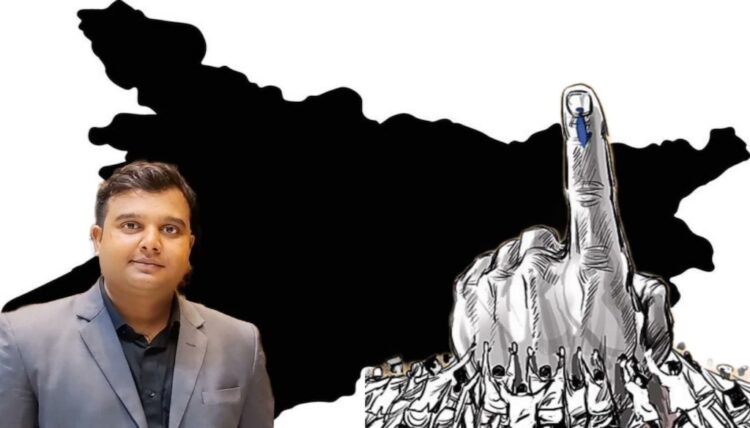
Winston Churchill noted that the essence of democracy is reflected in the choices of ordinary citizens at the ballot box, decisions that outweigh any amount of rhetoric. The Bihar Assembly elections reaffirm this principle. Behind every statistic and slogan lies a fundamental truth: it is the voters, not the parties, who determine the state’s direction, and they have done so with remarkable clarity. Despite the tumultuous political landscape in Bihar over the years, one constant remains: the electorate’s unwavering faith in Nitish Kumar, recognized as Mr Dependable. In a state characterized by shifting alliances and fluctuating narratives, Nitish holds a unique position — his credibility transcends party boundaries, and his governance record consistently counters anti-incumbency sentiments.
Critics have derisively labeled him “Palturam”, suggesting he is a leader who changes sides. However, Bihar’s voters interpret this political flexibility as pragmatism rather than opportunism; they view it as a source of stability rather than chaos. Each alliance shift is seen as a step towards administrative continuity, not disruption. This paradox highlights that the leader most accused of opportunism is also the one most trusted to uphold order. For over two decades, Nitish Kumar has governed with a reputation for sobriety, caution, and competence — qualities that resonate deeply in a state weary from memories of lawlessness and stagnation. Even his opponents seldom accuse him of corruption or communalism, and this absence of a “negative side” is significant.
In a politically polarized environment, he has remained a reliably steady figure for many. This election further illustrated the doctrine of legitimate expectation — when a leader consistently fulfills governance promises, voters anticipate more from him and reward him accordingly. Nitish’s promises may not be the loudest, nor his campaigns the flashiest, but his words carry weight because his tenure has shown he tends to deliver. Opposition parties made grand claims during the campaign, but credibility cannot be fabricated in the weeks leading up to the polls. Bihar’s voters have long distinguished between rhetoric and actual record, and ultimately, Nitish Kumar’s accomplishments prevailed.


The Bihar election results signify more than just a coalition mandate or a fleeting trend; they reveal a deeper political instinct: when faced with uncertainty, voters gravitate toward the familiar, the tested, and the dependable. In Bihar, that figure remains Nitish Kumar — a leader whose quiet reassurances are more significant than political theatrics. Ultimately, democracy has done what it always does: empower those whom the people trust to act responsibly. Bihar has once again indicated that in a state of constant change, Mr Dependable is its most steadfast anchor.